Music Performed for a Particular Religious Function or Ceremony Is Considered to Be Art Music
Performing arts (such equally traditional music, dance and theatre)
The performing arts range from vocal and instrumental music, dance and theatre to pantomime, sung verse and beyond. They include numerous cultural expressions that reverberate human inventiveness and that are also institute, to some extent, in many other intangible cultural heritage domains.
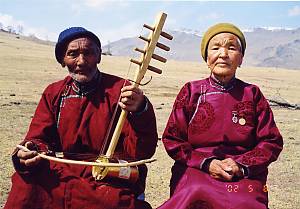
Music is perhaps the nearly universal of the performing arts and is institute in every society, most often as an integral part of other performing fine art forms and other domains of intangible cultural heritage including rituals, festive events or oral traditions. It can exist found in the nigh diverse contexts: sacred or profane, classical or pop, closely connected to work or entertainment. At that place may also be a political or economic dimension to music: it tin recount a community'southward history, sing the praises of a powerful person and play a cardinal role in economic transactions. The occasions on which music is performed are just as varied: marriages, funerals, rituals and initiations, festivities, all kinds of amusement equally well as many other social functions.
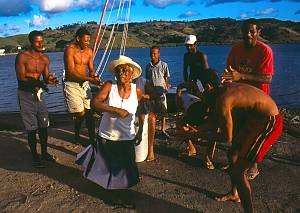
Dance, though very complex, may be described simply as ordered bodily movements, unremarkably performed to music. Apart form its physical aspect, the rhythmic movements, steps and gestures of dance oft express a sentiment or mood or illustrate a specific event or daily human action, such as religious dances and those representing hunting, warfare or sexual activity.
Traditional theatre performances usually combine acting, singing, trip the light fantastic toe and music, dialogue, narration or recitation simply may likewise include puppetry or pantomime. These arts, however, are more than just 'performances' for an audience; they may likewise play crucial roles in civilization and lodge such as songs sung while carrying out agronomical work or music that is part of a ritual. In a more intimate setting, lullabies are oft sung to aid a baby sleep.
The instruments, objects, artefacts and spaces associated with cultural expressions and practices are all included in the Convention's definition of intangible cultural heritage. In the performing arts this includes musical instruments, masks, costumes and other torso decorations used in dance, and the scenery and props of theatre. Performing arts are often performed in specific places; when these spaces are closely linked to the operation, they are considered cultural spaces by the Convention.
Many forms of performing arts are under threat today. As cultural practices go standardized, many traditional practices are abandoned. Fifty-fifty in cases where they go more than popular, only certain expressions may benefit while others suffer.
Music is perchance one of the all-time examples of this, with the recent explosion in the popularity of 'Globe Music'. Though information technology performs an important role in cultural exchange and encourages creativity that enriches the international art scene, the phenomenon can also crusade problems. Many diverse forms of music may be homogenized with the goal of delivering a consequent production. In these situations, in that location is petty place for certain musical practices that are vital to the procedure of performance and tradition in certain communities.
Music, dance and theatre are often key features of cultural promotion intended to attract tourists and regularly feature in the itineraries of tour operators. Although this may bring more visitors and increased revenue to a land or community and offer a window onto its civilisation, it may also result in the emergence of new ways of presenting the performing arts, which have been altered for the tourist market. While tourism can contribute to reviving traditional performing arts and give a 'market value' to intangible cultural heritage, it tin can likewise accept a distorting effect, as the performances are frequently reduced to show adapted highlights in order to meet tourist demands. Ofttimes, traditional fine art forms are turned into commodities in the proper name of entertainment, with the loss of important forms of community expression.In other cases, wider social or ecology factors may accept a serious touch on performing art traditions. Deforestation, for example, can deprive a community of wood to brand traditional instruments used to perform music.
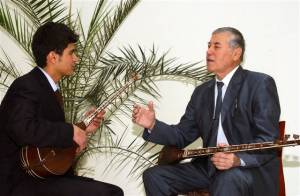
Many music traditions take been adapted to fit western forms of notation then they may exist recorded, or for the purpose of educational activity, but this process can be destructive. Many forms of music use scales with tones and intervals that do not correspond to standard western forms and tonal subtleties may be lost in the procedure of transcription. As well equally music beinghomogenised, changes to traditional instruments to brand them more than familiar or easier to play for students, such as the improver of frets to stringed instruments, fundamentally change the instruments themselves.
Safeguarding measures for traditional performing arts should focus mainly on transmission of knowledge and techniques, of playing and making instruments and strengthening the bail between master and amateur. The subtleties of a song, the movements of a dance and theatrical interpretations should all be reinforced.
Performances may also be researched, recorded, documented, inventoried and archived. In that location are countless sound recordings in athenaeum all effectually the world with many dating back over a century. These older recordings are threatened past deterioration and may exist permanently lost unless digitized. The process of digitisation allows documents to exist properly identified and inventoried.
Cultural media, institutions and industries can also play a crucial role in ensuring the viability of traditional forms of performing arts past developing audiences and raising sensation amongst the full general public. Audiences can exist informed about the various aspects of a grade of expression, assuasive information technology to gain a new and broader popularity, while as well promoting connoisseurship which, in turn, encourages interest in local variations of an art form and may issue in active participation in the performance itself.
Safeguarding may likewise involve improvements in preparation and infrastructure to properly fix staff and institutions for preserving the full range of performing arts. In Georgia, students are trained in anthropological fieldwork methods as well as how to record polyphonies, allowing them to create the foundations of a national inventory by creating a database.
drapercoulsomest87.blogspot.com
Source: https://ich.unesco.org/en/performing-arts-00054
0 Response to "Music Performed for a Particular Religious Function or Ceremony Is Considered to Be Art Music"
Post a Comment